Exploring the Differences Between East Coast and West Coast Psychedelic Culture
- jamesbanky71
- Apr 5
- 3 min read

Psychedelic culture in the United States has long been associated with distinct regional identities. The East Coast and West Coast each developed unique approaches to psychedelics, shaped by their social environments, historical moments, and cultural influences. Understanding these differences offers insight into how psychedelics have influenced art, music, spirituality, and social movements across the country. This post explores the contrasting characteristics of East Coast and West Coast psychedelic culture, highlighting their origins, key figures, and lasting impacts.
Origins and Historical Context
The West Coast psychedelic culture emerged prominently in the 1960s, centered around San Francisco and the Haight-Ashbury district. This movement was deeply connected to the counterculture revolution, anti-war protests, and the rise of the hippie lifestyle. Psychedelic use on the West Coast was often linked to communal living, free expression, and experimentation with consciousness.
On the East Coast, psychedelic culture developed differently. It was more closely tied to academic and intellectual circles, particularly in cities like New York and Boston. Early research on psychedelics, including studies on LSD and psilocybin, took place at universities and medical institutions. The East Coast scene was influenced by Beat Generation writers and artists who explored altered states of mind through literature and philosophy.
Cultural Expressions and Artistic Influence
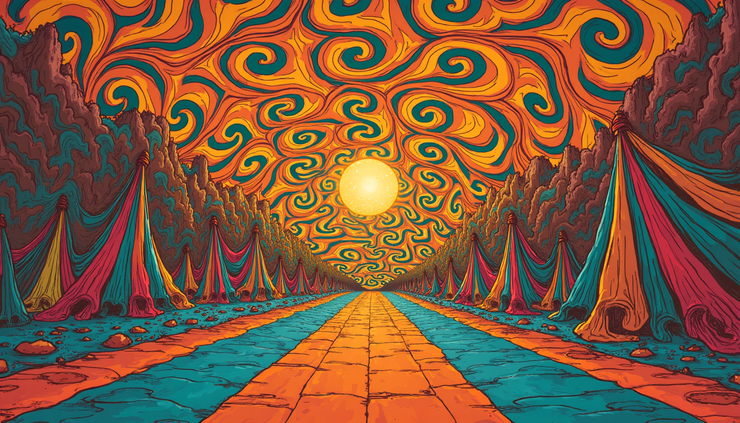
West Coast psychedelic culture is famous for its vibrant visual art, music, and festivals. The psychedelic rock scene, with bands like The Grateful Dead and Jefferson Airplane, defined the sound of the era. Art from this region often featured bright colors, fluid shapes, and surreal imagery designed to evoke the psychedelic experience. Events like the Monterey Pop Festival and Woodstock (though held in New York State) were emblematic of this expressive, communal spirit.
In contrast, the East Coast psychedelic scene leaned toward more experimental and avant-garde art forms. Artists and musicians incorporated psychedelics into jazz, folk, and early electronic music. The East Coast also fostered a literary psychedelic culture, with writers such as Allen Ginsberg and William S. Burroughs exploring themes of consciousness and perception. Psychedelic art here was often more abstract and intellectual, reflecting the academic environment.
Social and Political Dimensions
West Coast psychedelia was closely tied to social activism. The movement embraced ideals of peace, love, and environmentalism. Psychedelic culture on the West Coast often intersected with anti-establishment protests and efforts to challenge mainstream values. Communal living experiments and alternative lifestyles were common, emphasizing connection and harmony with nature.
The East Coast approach was more varied. While some groups embraced activism, others focused on personal exploration and scientific inquiry. Psychedelic use was sometimes seen as a tool for psychological healing or spiritual growth rather than political rebellion. The East Coast also experienced more legal restrictions and law enforcement crackdowns, which shaped the culture’s underground nature.

Key Figures and Influencers
Several individuals helped shape the distinct psychedelic cultures on each coast. On the West Coast, figures like Timothy Leary, who later moved to California, and Ken Kesey, leader of the Merry Pranksters, were central. Their promotion of LSD and public events like the Acid Tests popularized psychedelics among youth and artists.
The East Coast had pioneers such as Dr. Richard Alpert (later Ram Dass) and Dr. Timothy Leary during his Harvard years, who conducted early research on psychedelics. Writers like Jack Kerouac and Allen Ginsberg also contributed to the intellectual and literary exploration of psychedelics. The East Coast’s academic institutions played a key role in legitimizing psychedelic research before it became more mainstream.
Lasting Impact and Modern Perspectives
Today, the legacy of both coasts continues to influence psychedelic culture. The West Coast remains associated with festivals, art, and music that celebrate psychedelic experiences openly. Cities like San Francisco and Los Angeles host events that blend traditional psychedelic culture with modern wellness trends.
The East Coast has seen a resurgence in scientific research and therapeutic use of psychedelics. Institutions in Boston, New York, and Maryland are leading clinical studies on psychedelics for mental health treatment. This reflects the East Coast’s historical focus on research and healing.
Both coasts contribute to a broader understanding of psychedelics, balancing creative expression with scientific inquiry. Their differences highlight how environment and culture shape the way psychedelics are experienced and integrated into society.
https://webcartels.vip/product/order-kismet-magic-mushroom-gummies/ https://webcartels.vip/product/order-kismet-magic-mushroom-gummies/


Comments