Top 5 Dangerous Mushroom Lookalikes You Need to Avoid
- jamesbanky71
- Mar 14
- 3 min read

Mushroom foraging can be a rewarding hobby, but it carries serious risks. Many edible mushrooms have toxic doppelgängers that can cause severe poisoning or even death. Knowing which mushrooms to avoid is crucial for anyone interested in wild fungi. This guide highlights five dangerous mushroom lookalikes that often confuse foragers and explains how to spot them before it’s too late.

1. False Morel vs. True Morel
Morels are prized edible mushrooms with a distinctive honeycomb cap. Unfortunately, false morels look very similar but contain dangerous toxins.
True Morel: Has a hollow stem and cap, with a symmetrical honeycomb pattern.
False Morel: The cap is wrinkled or lobed, often with a cottony or chambered stem.
Eating false morels can cause severe gastrointestinal distress, dizziness, and in some cases, liver damage. Always cut the mushroom open to check for hollow chambers before consuming.
2. Death Cap vs. Paddy Straw Mushroom
The death cap mushroom is responsible for most fatal mushroom poisonings worldwide. It closely resembles the edible paddy straw mushroom.
Death Cap: Usually pale green or yellowish, with a smooth cap and white gills. It has a bulbous base covered by a volva (a cup-like structure).
Paddy Straw Mushroom: Smaller, with a white to cream cap and lacks the volva.
The death cap contains amatoxins that cause liver failure. Never eat wild mushrooms unless you are 100% certain of their identity.
3. Jack-o’-Lantern vs. Chanterelle
Jack-o’-lantern mushrooms glow faintly in the dark and are toxic, but they look very similar to the popular chanterelle mushroom.
Chanterelle: Has a wavy, funnel-shaped cap with forked gills running down the stem.
Jack-o’-Lantern: Has true gills that are sharp and non-forked, and grows in clusters on wood.
Jack-o’-lantern mushrooms cause severe stomach cramps and vomiting. Chanterelles have a fruity aroma, while jack-o’-lanterns smell more like raw pumpkin.
4. Green-Spored Parasol vs. Shaggy Parasol
The green-spored parasol is toxic and can be mistaken for the edible shaggy parasol mushroom.
Shaggy Parasol: Has a white to cream spore print and a scaly cap.
Green-Spored Parasol: Has a greenish spore print and a similar scaly cap.
Consuming the green-spored parasol can cause gastrointestinal upset. Always check the spore print color when identifying parasol mushrooms.
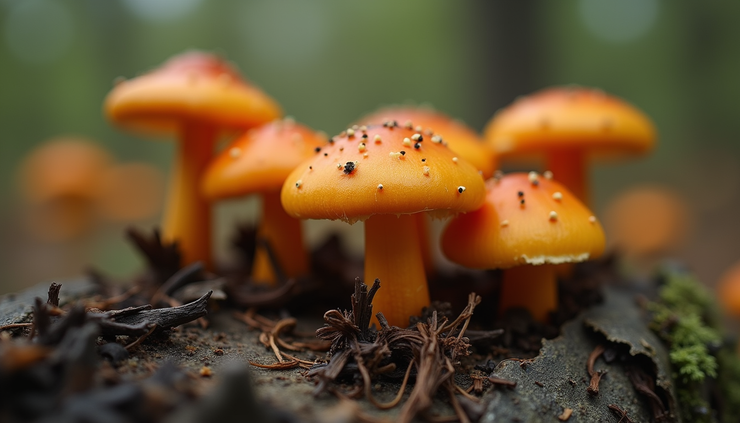
5. Deadly Galerina vs. Honey Fungus
Deadly Galerina mushrooms are small brown fungi that grow on wood and resemble the edible honey fungus.
Honey Fungus: Has a yellow-brown cap and grows in large clusters on tree roots.
Deadly Galerina: Smaller, with a rusty brown spore print and grows on decayed wood.
Deadly Galerina contains deadly amatoxins similar to the death cap. Avoid any small brown mushrooms growing on wood unless you are an expert.
Stay Safe When Foraging
Mushroom poisoning can be life-threatening. If you are new to foraging, consider these safety tips:
Use multiple identification sources such as field guides and apps.
Join local mycology clubs or guided foraging tours.
When in doubt, do not eat the mushroom.
Keep emergency contact numbers handy in case of poisoning.
For those interested in exploring mushroom-related products safely, there are many legal and safe options available online. For example, you can find a variety of mushroom-inspired edibles and supplements at Web Cartels, including:
These products offer a safe way to enjoy mushroom benefits without the risks of wild foraging.


Comments